
Clinical · Self-paced · 11 lessons
CODE RED™: Aesthetic Complications
- Scope
- 11 lessons
- Pace
- Self-paced
- Price
- £297
- Commitment
- ≈ 4.5 hours self-paced, plus local team integration
The promise. Read deterioration earlier, lead the first safe response and make an escalation another clinician can act on.
CODE RED is an advanced, case-led clinical-reasoning programme for qualified aesthetic clinicians. It develops the assessment, urgency, first-response, escalation and handover decisions required when a presentation moves beyond expected recovery.
Lifetime access
Self-paced, no expiry.
Updates included
As guidance evolves.
Yours to keep
One-off payment, no rebill.
Counts toward NMC revalidation
CPD hours and a Completion Certificate for your portfolio. How to log this for revalidation.
Training is a professional expense. For working practitioners these courses may count as tax-deductible CPD, so part of the cost could come off your tax bill instead of going to HMRC. Check your own position with your accountant.
Try the teaching first
Start CODE RED Readiness Course free. No card needed.
Start CODE RED Readiness Course free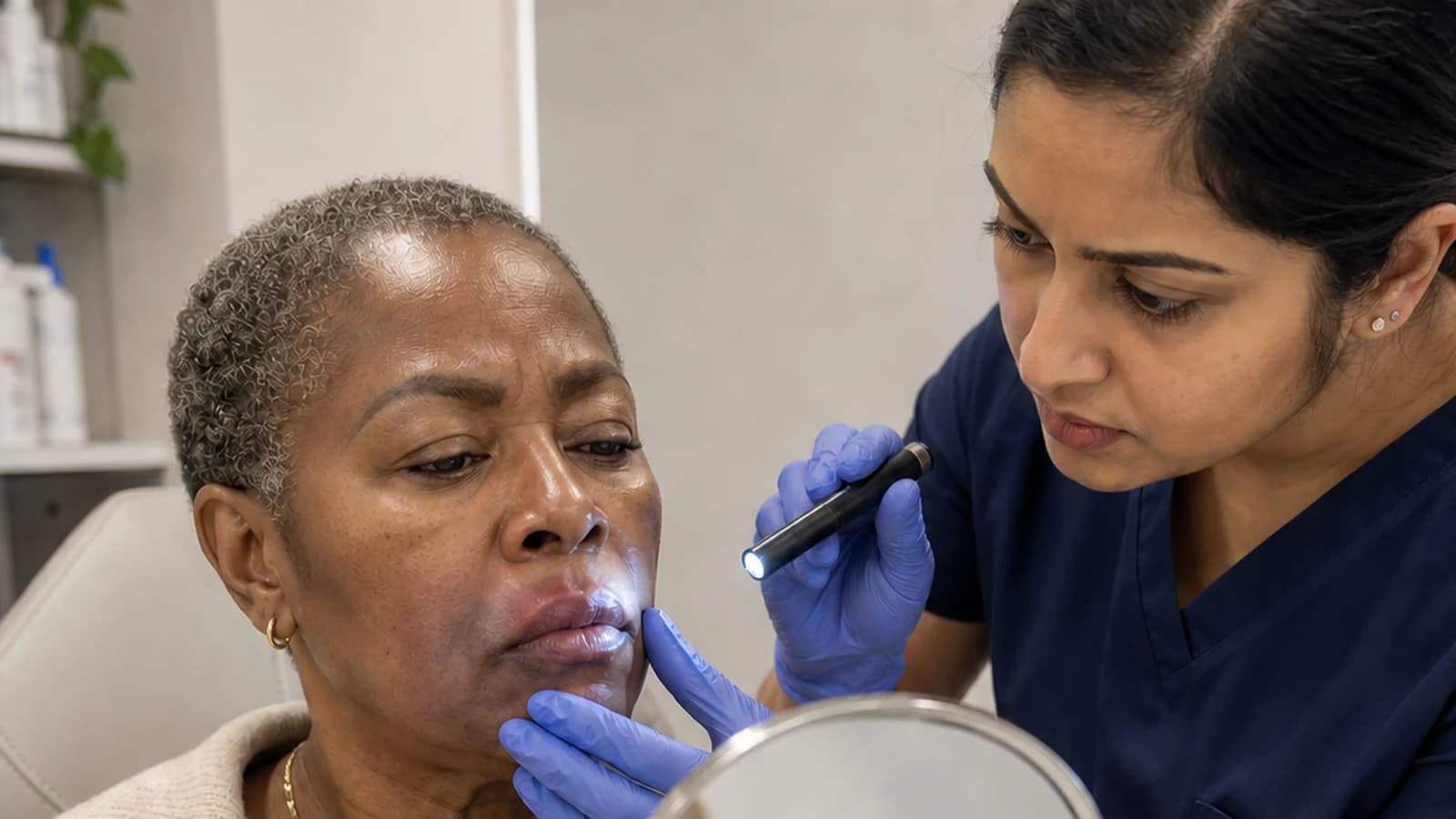
The transformation
Before the course→ after the course.
- Before the course
A complication presentation feels like an unstructured emergency.
After the courseA structured assessment that makes chronology, trend, function and urgency visible.
- Before the course
Uncertainty about when monitoring is no longer enough.
After the courseAn active plan with a clock, owner, trigger and a clear threshold for escalation.
- Before the course
A rushed phone call with missing details.
After the courseA concise handover with chronology, uncertainty, action taken and the help required.
- Before the course
Notes assembled after the event.
After the courseContemporaneous documentation that supports continuity, review and professional accountability.
Inside the lesson
Editorial lessons, built to be read.
Each lesson runs as a clean editorial article and ends with the next lesson cued up. Mobile-first between consultations and keyboard-navigable at your desk.
- Patient-specific examples and practical prompts
- Per-lesson progress tracking, with the next lesson queued up
- Keyboard navigation for desk study (arrow keys / J–K)
- Calm typography, no auto-play video, no marketing pop-ups
What you’ll learn
The outcomes,not just the topics.
- Advanced assessment of chronology, trend and functional change
- Vascular, tissue, inflammatory, allergic and delayed patterns
- Ocular, neurological and systemic red flags
- Human factors, first response and escalation
See every outcome
- Structured handover, chronology and incident learning
- Progressive case decisions with answer rationale
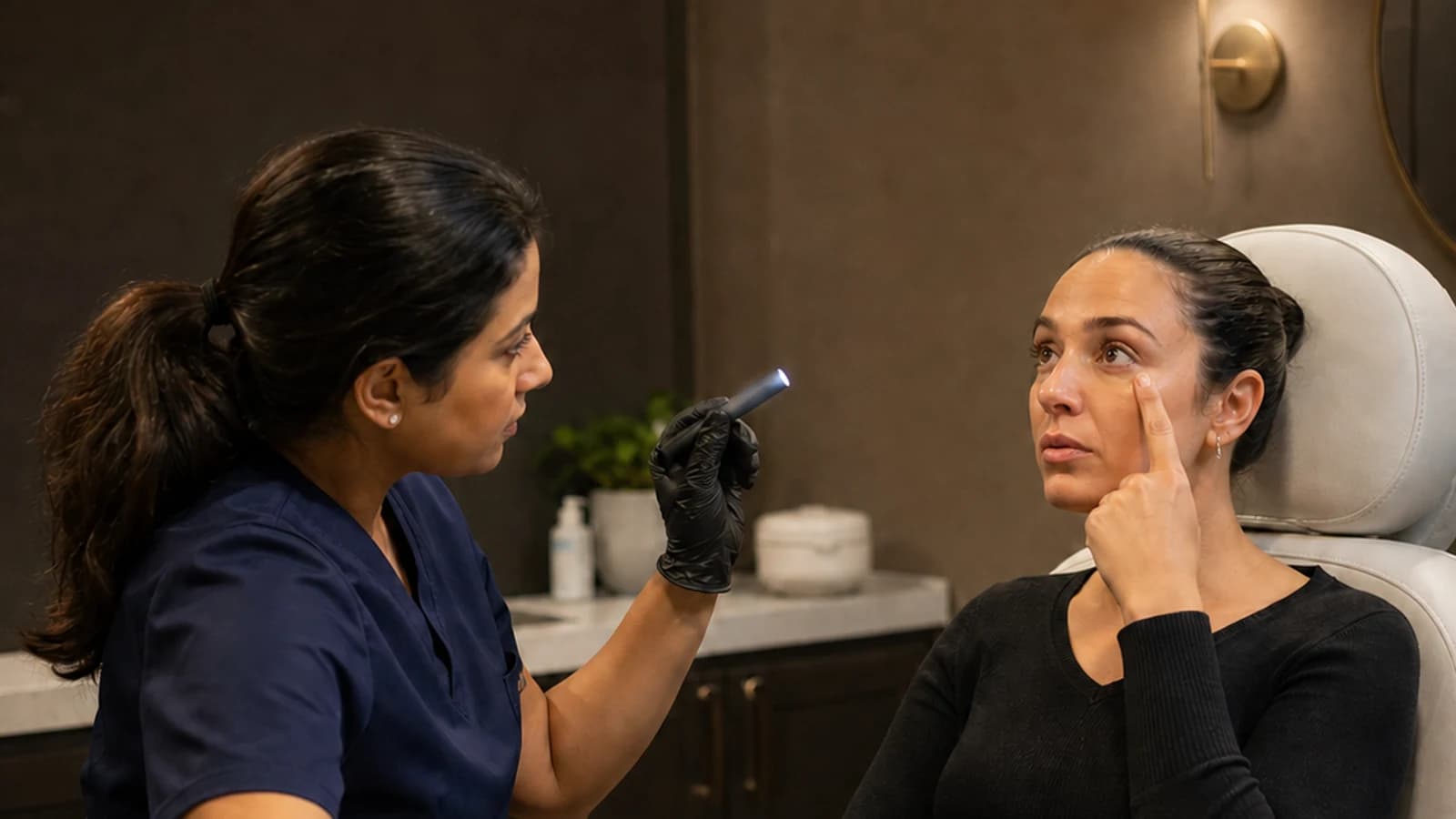
The curriculum
11 lessons.Built to ship change.
- 01
Read the presentation
Build a defensible urgency decision from chronology, trend, distribution, symptoms, function, treatment context and the limits of remote information.
- Expected response versus warning
- Advanced assessment
- Remote-information limits
- Escalation thresholds
- 02
Recognise time-critical patterns
Use treatment-aware clinical reasoning across vascular and tissue risk, inflammatory and allergic deterioration, delayed reactions, and ocular or neurological symptoms.
- Vascular and tissue patterns
- Inflammatory and allergic deterioration
- Delayed presentations
- Functional red flags
- 03
Lead the first response
Apply human factors, closed-loop delegation, emergency escalation and structured handover while protecting the patient and staying inside scope.
- First-response leadership
- Closed-loop delegation
- Emergency escalation
- Structured handover
- 04
Test and embed the decision
Apply the framework to progressive cases, review each assessment rationale and then translate the learning into a verified local pathway.
- Clinical chronology
- Incident learning
- Progressive case decisions
- Advanced knowledge check
Why I teach this
I’m Bernadette Tobin, RN, MSc.
Nurse, senior lecturer and founder of award-winning Visage Aesthetics. Bernadette Tobin is an NMC registered Advanced Nurse Practitioner with an MSc in Advanced Practice, university teaching experience and more than a decade in aesthetics.
Recognised by the industry
- 2026Shortlisted
Independent Education Awards 2026
Business Awards UK
- 2026Nominee
Educator of the Year 2026
Beauty & Aesthetics Awards
- 2026Winner
Best Non-Surgical Aesthetics Clinic 2026 (Essex)
Health, Beauty & Wellness AwardsFounder, Visage Aesthetics

What’s included
Everything thatcomes with enrolment.
- 11 advanced, fully illustrated lessons
- Progressive case-led decision room
- First-response, escalation and human-factors framework
- Structured handover and chronology teaching
See everything included
- Worked examples plus editable clinic resources
- 45 in-lesson questions plus a 16-question final assessment, all with answer rationale
- Lifetime access, including reviewed updates

Frequently asked
Before youenrol.
Is this a hands-on complications-management course?
No. It is an advanced online clinical-reasoning programme covering recognition, assessment, first response, escalation, handover and documentation. It does not replace treatment-specific hands-on training, prescribing arrangements, emergency policy, insurer requirements or local clinical governance.
Who is this programme for?
Qualified clinicians already practising in aesthetics who have existing treatment-specific competence, emergency training and access to local escalation pathways. It is not introductory treatment training.
Is the £297 payment one-off?
Yes. £297 is a one-off payment for lifetime access.
Is it CPD evidence?
The course includes a knowledge check and Certificate of Completion. Any formal accreditation claim will only be added after the relevant approval is recorded.