
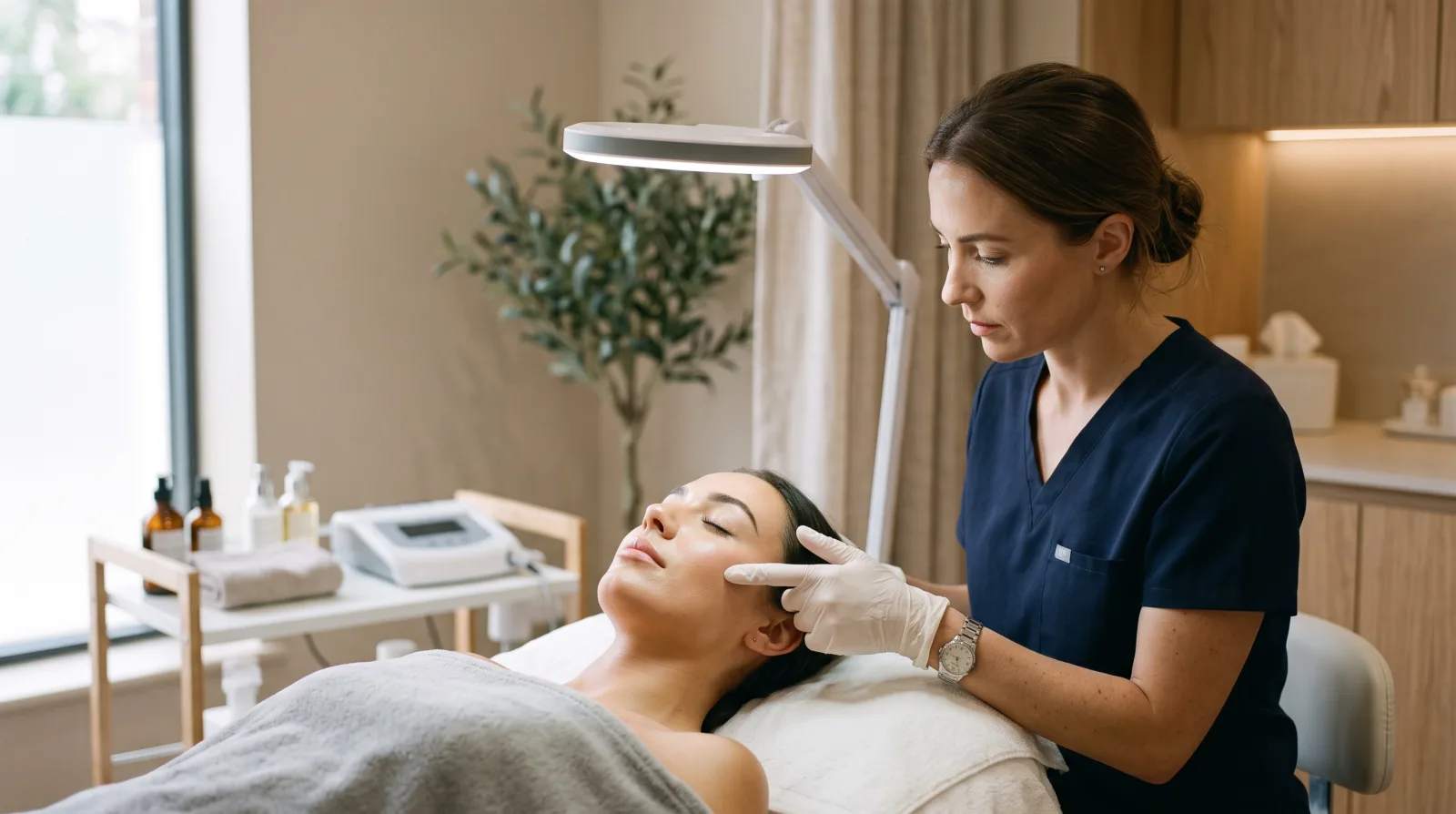
Rosacea is a chronic inflammatory skin condition managed over a lifetime, not resolved in a course of treatments. The clinical task is reducing disease burden, managing triggers, and matching interventions to subtype. For non-prescribing aesthetic practitioners, that means device therapy, skincare guidance, and knowing when to refer.
What Is Rosacea? Classification and Subtypes
Rosacea is classified into four subtypes, and the subtype determines the treatment pathway. Getting this wrong wastes clinical time and risks worsening the condition.
Erythematotelangiectatic rosacea (ETR) is the most common presentation in aesthetic practice. Persistent central facial flushing, visible telangiectasia, and heightened skin sensitivity characterise this subtype. It is the form most amenable to device-based aesthetic interventions.
Papulopustular rosacea (PPR) presents with papules, pustules, and erythema. The differential from acne vulgaris matters: rosacea lacks comedones. PPR has a strong evidence base for topical and oral prescription treatments, and poorly controlled PPR is not the starting point for aesthetic device work.
Phymatous rosacea involves progressive skin thickening, most often on the nose (rhinophyma). Established phymatous change responds to ablative laser, but this is specialist territory requiring formal assessment and appropriate training.
Ocular rosacea involves the eyelids and conjunctiva. Any suspected ocular involvement warrants ophthalmology referral. Aesthetic practitioners should recognise the signs. The eye is not a site for aesthetic intervention in this context.
Which Subtypes Respond to Aesthetic Device Treatments?
ETR is where aesthetic practitioners have the clearest role. The persistent erythema and telangiectasia that define this subtype respond to selective photothermolysis. The evidence supports IPL and vascular laser as the primary device modalities.
PPR is medically managed first. Introducing energy-based treatments to actively inflamed skin with live papules and pustules risks flare and tissue damage. The sequence matters: control the inflammation, then consider device adjuncts where appropriate.
Phymatous change requires specialist assessment before any intervention. This is not a subtype for general aesthetic management.
Evidence for Prescription-Based Treatments
Both the NICE Clinical Knowledge Summary on rosacea and BAD clinical guidance provide a clear summary of the pharmacological evidence. Prescribing sits outside the scope of non-prescribing aesthetic practitioners, but understanding what the medical pathway looks like is part of being a clinically literate colleague and a credible referrer.
Topical metronidazole has a long evidence base in PPR, supported by multiple randomised controlled trials. It remains a first-line option in most clinical guidelines.
Topical ivermectin is a newer addition to the evidence base, with head-to-head data showing superiority to metronidazole for PPR in terms of lesion clearance. Its mechanism includes both anti-inflammatory and anti-Demodex activity.
Topical azelaic acid (at prescription concentrations) is evidence-supported for both PPR and ETR. The over-the-counter formulations available in cosmetic skincare carry a smaller evidence footprint than the prescription strengths used in trials. The two are not equivalent.
Topical brimonidine targets the erythema component via transient vasoconstriction. The effect is fast and visible, but temporary. Rebound flushing following discontinuation is documented and worth noting in informed consent conversations.
Oral doxycycline at sub-antimicrobial doses has evidence in PPR through anti-inflammatory rather than antibiotic mechanism. A prescriber makes this decision. The practitioner's role is to know it exists and to refer when PPR is inadequately controlled.
None of these treatments are available to non-prescribing aesthetic practitioners to initiate. The value aesthetic practice brings to prescription-managed rosacea is structural: structured trigger monitoring, managing the skincare environment, providing device adjuncts, and reducing the clinical burden between prescribing consultations.
Evidence for Energy-Based Devices in Rosacea
This is where aesthetic practice has independent clinical standing.
Intense pulsed light (IPL) has the strongest device evidence for ETR and telangiectasia. Selective photothermolysis (targeting oxyhaemoglobin in superficial vessels) reduces erythema and vascular lesion count across a series of treatments. Multiple controlled trials support this. Results are real, but not permanent: rosacea is a lifelong condition and maintenance sessions are part of realistic treatment planning.
Pulsed dye laser (PDL) targets vascular structures with high chromophore specificity. Evidence in rosacea is well-established, particularly for fixed erythema and telangiectasia. PDL is often cited alongside IPL as a first-line device option in ETR.
Nd:YAG laser is used for deeper or larger-calibre vessels and for more advanced presentations. The evidence base in rosacea is smaller than for PDL or IPL in typical ETR, but it has an established role in selected cases, particularly where other modalities have not achieved adequate vascular clearance.
What the evidence does not support is device treatment during active PPR flares. Applying IPL or laser to skin with live papules and pustules is outside guideline-consistent practice and risks patient harm. Sequencing matters: inflammatory control first, device work second.
Informed consent for rosacea device treatment must include the chronic nature of the condition, the expected maintenance requirement, and realistic expectations about outcomes. A client expecting permanent clearance from IPL has not been properly consented.
Trigger Identification: The Clinical Tool Most Clinics Skip
No device or prescription treatment reduces rosacea burden as consistently as structured trigger management. This is also one of the highest-value contributions an aesthetic practitioner can make between prescribing consultations.
Rosacea triggers vary by individual, but common categories include UV exposure, heat (environmental and exercise-induced), alcohol, spicy food, stress, and skincare formulations. Taking a structured trigger history at consultation, and reviewing it at follow-up, is low-cost and clinically significant.
Skincare formulation is the trigger category most directly within aesthetic scope. High-alcohol toners, fragranced products, physical exfoliants, and potent actives (high-strength retinoids, high-concentration glycolic acid) are frequently implicated. Rosacea-appropriate skincare is fragrance-free, minimal-ingredient, barrier-supporting, and formulated to a skin-appropriate pH. Helping clients audit and revise their skincare is practical, evidence-informed, and within every practitioner's scope regardless of prescribing status.
Scope of Practice: What Aesthetic Practitioners Can and Cannot Do
A clear working framework:
Within scope for non-prescribing aesthetic practitioners: IPL and vascular laser for ETR and telangiectasia in the absence of active inflammatory disease; trigger identification and management; skincare guidance; structured referral to a prescriber for PPR, ocular involvement, or uncontrolled erythema.
Outside scope without a prescribing qualification: Initiating any of the prescription topicals or oral treatments described above.
Must refer: Any suspected ocular rosacea. Any severe or rapidly progressing phymatous change. Any case where inflammatory burden is not responding to conservative measures and the client does not have an active prescribing relationship.
This referral-ready approach is what distinguishes well-trained aesthetic practitioners from those operating beyond defensible clinical limits. The regulation pillar covers how referral pathways sit within broader UK practitioner obligations, and this question of scope is becoming more prominent as the UK aesthetics licensing scheme develops its practitioner competency requirements.
For practitioners who see rosacea regularly and want to develop a more structured clinical framework, Rosacea Beyond Redness covers the full picture: subtype identification, evidence-based treatment planning, trigger management, and the client communication skills that support long-term outcomes.
FAQ
Is rosacea treatable or just manageable?
Rosacea is a chronic condition. The current evidence supports management rather than cure. With appropriate treatment matched to subtype, most patients achieve significant reduction in symptoms and disease burden. ETR responds well to IPL across a treatment series. PPR responds to prescription anti-inflammatory treatments. Neither approach switches rosacea off permanently, and practitioners who set that expectation are setting up a complaint.
Can aesthetic practitioners treat rosacea without a prescribing qualification?
Device-based treatment of ETR (IPL, pulsed dye laser) and trigger management sit within scope for appropriately trained aesthetic practitioners. Prescribing topical or oral rosacea treatments requires a prescribing qualification. Non-prescribing practitioners should have a clear referral pathway to a GP or nurse prescriber for clients who need pharmacological management. Working without that pathway in place is a governance gap.
Does IPL cure rosacea?
No. IPL reduces erythema and telangiectasia through selective photothermolysis, but does not address the underlying pathophysiology of the condition. Most patients require maintenance treatments to sustain clinical improvement. Realistic informed consent includes the maintenance expectation from the outset, not as an afterthought when the client queries why their symptoms have returned.
Which rosacea subtype responds best to IPL?
Erythematotelangiectatic rosacea (ETR) with persistent facial erythema and visible telangiectasia shows the strongest response to IPL in the published evidence. Active papulopustular rosacea (PPR) with live papules and pustules is not an appropriate starting point for IPL. The inflammatory phase should be controlled, usually via prescription management, before device-based treatment is introduced.
Do cosmetic skincare ingredients make rosacea worse?
For many patients, yes. Fragrance, high-alcohol bases, certain preservatives, and aggressive exfoliants are consistently reported as rosacea triggers. The evidence for specific formulation avoidance is largely observational rather than RCT-grade, but the pattern across clinical practice and the guideline literature is consistent. Fragrance-free, minimal-ingredient, barrier-supporting skincare is standard guidance for rosacea-prone skin, and directing clients toward appropriate formulations is within every practitioner's scope.
Is rosacea more common in certain skin types or fitzpatrick types?
Rosacea is historically associated with lighter Fitzpatrick skin types (I-III) and this is where most of the clinical literature is concentrated. It does occur across the full Fitzpatrick range, but diagnosis and device treatment in darker skin types requires greater caution, particularly with IPL and laser modalities where the risk of post-inflammatory pigmentation is higher. Practitioners working across diverse skin types should ensure their training and device protocols reflect this.