
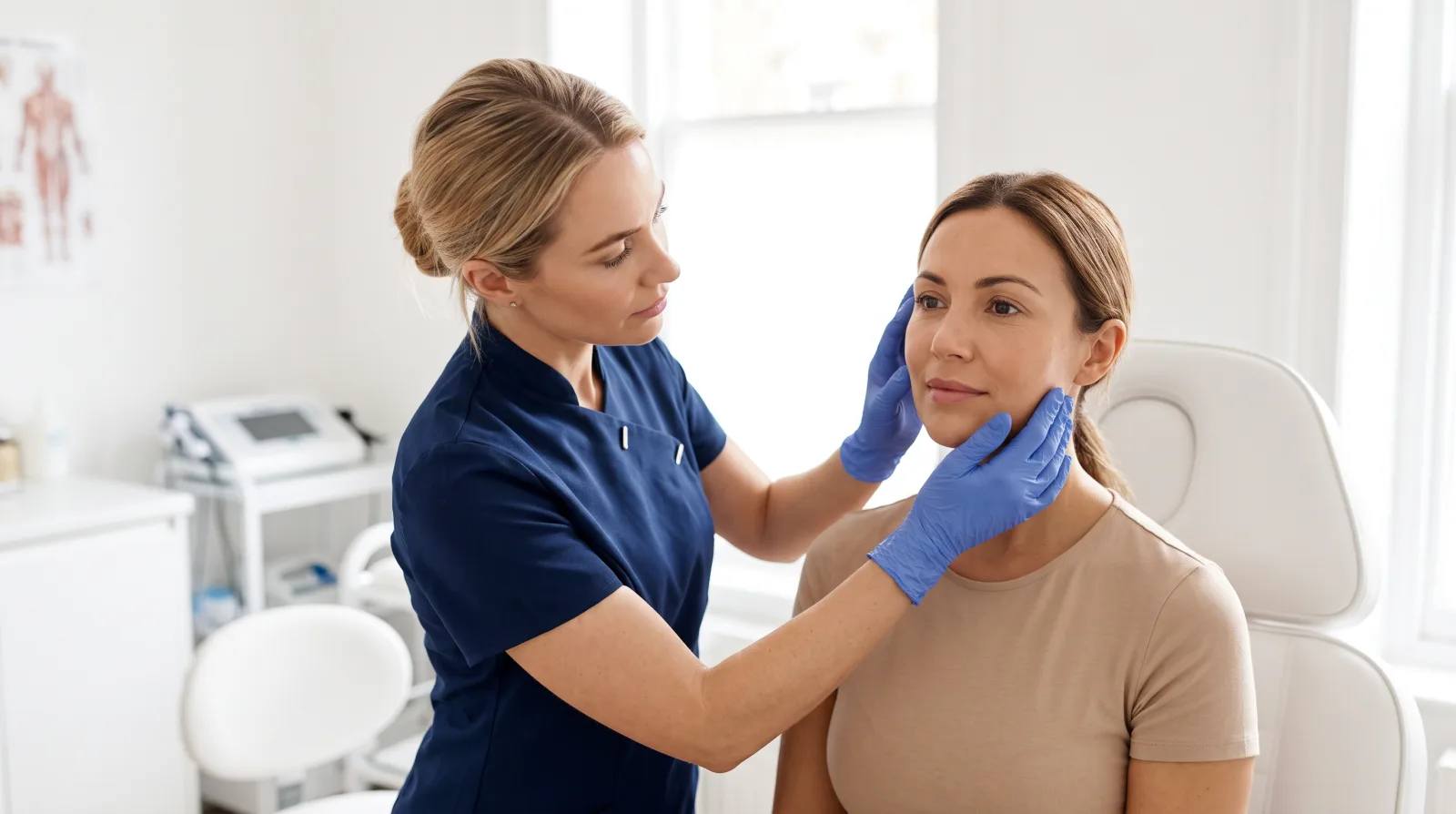
The consultation is where most rosacea treatment failures start. Not in the treatment room.
I have worked with practitioners who understand device therapy, read the literature, and manage trigger advice well. But when a client returns with a flare after a successful treatment series, the question I always ask is: was the subtype confirmed before treatment began?
Rosacea is a cluster of related but distinct conditions under a single name. The most widely used clinical classification divides it into four subtypes, each with different clinical features, different treatment responses, and different risks attached to the wrong intervention. Treating rosacea as a single entity is treating a differential diagnosis as a confirmed one.
Erythematotelangiectatic Rosacea
Erythematotelangiectatic rosacea (ETR) presents as persistent central facial erythema, visible telangiectasia, flushing episodes, and heightened skin reactivity. It is the form most commonly seen in aesthetic practice, and the subtype with the strongest evidence base for device-based intervention.
The clinical picture at consultation includes a history of episodic flushing that has become more persistent over time, stinging or burning on product application, and reactive skin that flares to temperature change, UV exposure, alcohol, or spiced food. The skin barrier is impaired. Ceramide levels are reduced, transepidermal water loss is elevated, and external triggers penetrate and provoke more readily than in unaffected skin.
The NICE Clinical Knowledge Summary on rosacea and the British Association of Dermatologists guidelines both support IPL and vascular laser for telangiectasia and persistent erythema in ETR. Barrier-supportive skincare is part of the treatment framework, not a supplementary recommendation.
Papulopustular Rosacea
Papulopustular rosacea (PPR) presents with papules, pustules, and erythema. The single most important differential is acne vulgaris. The distinction is comedones: rosacea does not produce them. A client presenting with central facial pustules and no comedones has PPR until proven otherwise.
PPR responds to topical agents including azelaic acid and ivermectin, and to oral antibiotics for moderate to severe disease. These are prescription treatments. A non-prescribing aesthetic practitioner does not lead on PPR management. The clinical role is accurate identification and referral to a prescribing practitioner. Attempting device therapy on uncontrolled PPR worsens the inflammatory burden.
Phymatous Rosacea
Phymatous rosacea involves progressive skin thickening, most commonly affecting the nose to produce rhinophyma. It is less frequent than ETR and PPR but more easily missed in its early stages, when the thickening is subtle and may be attributed to large pores or uneven texture.
Established phymatous change responds to ablative laser, but assessment and intervention are specialist territory. The aesthetic practitioner's role is recognition and prompt referral. Applying a standard rosacea skin protocol to phymatous tissue wastes the client's time and the practitioner's credibility.
Ocular Rosacea
Ocular rosacea involves the eyelids and conjunctiva. Symptoms include lid margin redness, dry eye, foreign body sensation, and a history of blepharitis. In any rosacea consultation, ask directly about eye symptoms. They are underreported because clients do not connect a skin condition to eye discomfort.
Any suspected ocular involvement warrants ophthalmology referral. The eye is not a site for aesthetic intervention, and delaying referral risks corneal complications. This is one of the clearer scope-of-practice lines in aesthetic practice.
The Phenotype Approach
The four-subtype model remains the most widely used clinical framework. Clinical research over the past decade has also moved toward a phenotype-based approach, which recognises that many clients present with features of more than one subtype at the same time.
The phenotype model identifies discrete clinical features, including flushing, persistent erythema, papules, pustules, telangiectasia, phymatous changes, and ocular involvement, and rates each by its diagnostic weight. A client can carry ETR features and PPR features simultaneously. Treating only the vascular component while active papulopustular inflammation continues leads to an underperforming treatment series.
The practical implication: the clinical question at consultation is not "which single subtype does this client have?" It is "which features are present and which need to be addressed first, and by whom?"
What the Consultation Assessment Needs to Cover
For accurate subtype classification in aesthetic practice, the history and examination should cover:
Flushing pattern. When does it occur, how long does it last, and what triggers it? ETR is characterised by episodic flushing that transitions into persistent erythema over time.
Lesion type. Papules and pustules without comedones indicate PPR. Comedones indicate acne. Both can be present at once and require separate management plans.
Skin texture. Any progressive thickening around the nose, chin, ears, or forehead warrants documentation and dermatology referral for assessment of phymatous change.
Eye symptoms. Lid margin redness, persistent dryness, and foreign body sensation are the presenting features of ocular rosacea. They need to be asked about, not waited for.
Skincare history. High-concentration actives, particularly strong retinoids and high-percentage glycolic acid, aggravate ETR significantly. Identifying and removing barrier-disruptive products is often the first effective clinical step.
Trigger mapping. Documenting the specific triggers, their frequency, and their severity forms the basis of ongoing management advice and helps explain the clinical picture to the client.
Scope of Practice, Applied at Classification
Non-prescribing aesthetic practitioners work directly with ETR, using device therapy and skincare guidance within the evidence base. PPR requires prescription-led management. Phymatous change requires specialist assessment. Ocular rosacea requires ophthalmology.
Classification is not only a clinical skill. It determines which clients you treat, which you refer, and which need a prescribing practitioner alongside aesthetic management. A clear referral pathway, applied at the point of subtype confirmation, is what protects both the client and the practitioner.
For the full clinical framework for rosacea assessment, subtype identification, phenotype approach, and treatment sequencing in aesthetic practice, Rosacea Beyond Redness covers the consultation process and evidence base in depth.