
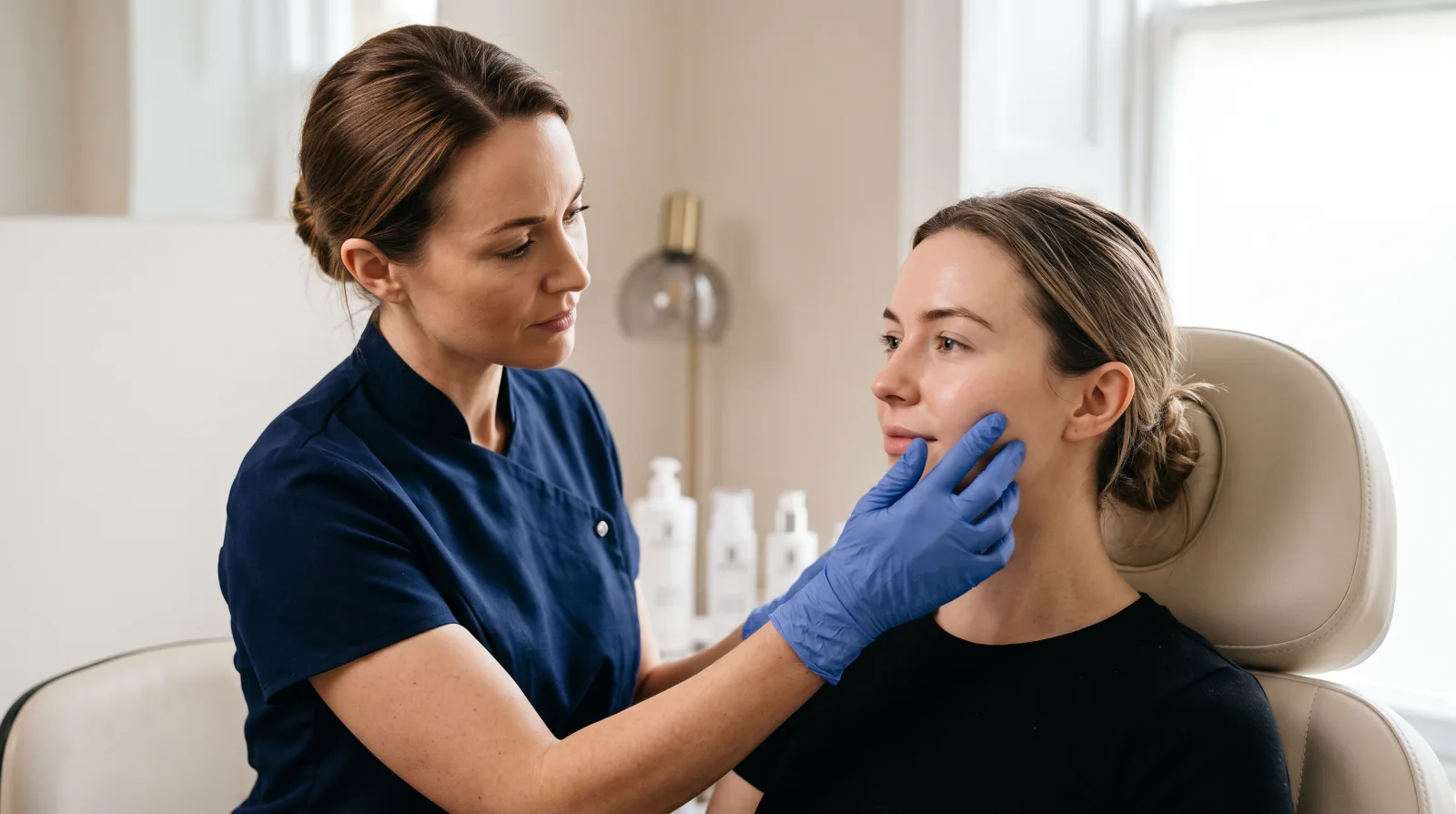
Rosacea is commonly framed as a vascular condition. The visible changes are vascular, so the framing makes sense. But barrier dysfunction runs through the pathophysiology at every stage, and most treatment failures in aesthetic practice trace back to it being ignored.
I see this regularly. A client with controlled rosacea returns with a flare after several months away. The prescription or device treatment worked for a while, then stopped holding. Their skincare routine had been modified by a well-intentioned aesthetician, full of actives. Nothing was clinically unsafe on its own. But nothing was barrier-supportive either, and the underlying structural vulnerability was never addressed.
Understanding the barrier changes the clinical question from "what are we treating" to "what are we maintaining."
What Barrier Dysfunction Looks Like in Rosacea Skin
The epidermal barrier in rosacea-affected skin is structurally and functionally impaired compared to healthy skin. Ceramide levels are reduced. Transepidermal water loss is elevated. The tight junction proteins that normally restrict movement of irritants and microorganisms through the epidermis are disrupted.
This matters clinically because an impaired barrier is more permeable to environmental triggers. UV exposure, temperature change, irritant skincare ingredients, and Demodex mite by-products all penetrate more readily and trigger the inflammatory cascade more readily. The barrier impairment does not cause rosacea, but it amplifies every external trigger the client encounters.
The NICE Clinical Knowledge Summary on rosacea identifies trigger management as a core component of clinical care. The barrier is the mechanism behind why triggers land so consistently hard in susceptible skin.
Cathelicidin and Innate Immune Activation
A key element of the pathophysiology is cathelicidin activity. In healthy skin, the cathelicidin antimicrobial peptide LL-37 is produced at low levels as part of normal innate immune defence. In rosacea skin, LL-37 is overproduced and cleaved into fragments that drive vascular dilation, immune cell recruitment, and neurogenic inflammation.
The British Association of Dermatologists guidelines on rosacea recognise the inflammatory and neurovascular pathophysiology as central to the rationale for anti-inflammatory treatment strategies.
The clinical implication for aesthetic practice: procedures or products that cause micro-injury, irritation, or thermal stress to already sensitised rosacea skin activate the same innate immune pathway. This is why poorly sequenced treatments cause flares that persist for weeks, and why clients who felt "fine" after one IPL session can respond very differently to the next if the barrier has been disrupted in between.
Skincare as a Clinical Intervention
Barrier-supportive skincare in rosacea is part of the treatment framework, not an optional recommendation. For non-prescribing aesthetic practitioners, it is often the most impactful clinical lever available.
Ceramide replacement. Moisturisers containing ceramides, particularly ceramide NP, ceramide AP, and ceramide EOP, support structural barrier restoration. The evidence for ceramide-containing formulations in compromised skin is consistent across dermatological literature, including for conditions where barrier impairment is central to the pathophysiology.
pH-appropriate formulation. Healthy skin has a slightly acidic surface pH of approximately 4.5 to 5.5. Many facial cleansers sit significantly higher, which impairs the acid mantle and disrupts the enzymes responsible for ceramide synthesis. Directing clients toward pH-appropriate cleansing is a low-cost, clinically justified step that is frequently skipped.
Fragrance-free, minimal-ingredient. Fragrance is a consistently documented irritant in rosacea-prone and sensitive skin. A long ingredient list increases the probability of encountering a trigger. The principle is to reduce what the barrier has to manage, not to add to it.
Avoiding barrier-disrupting actives during active disease. High-concentration glycolic acid, strong retinoids, and physical exfoliants increase transepidermal water loss and can worsen barrier integrity. These have a role in other clinical contexts, but they are not first-line choices in active rosacea. The sequence matters: establish barrier support and reduce inflammatory burden first. Consider introducing actives cautiously only once the skin is stable.
What This Changes in Consultation
Two practical shifts for aesthetic practice.
A skincare audit at every consultation. Take a structured history of what the client is using. Cover cleanser, SPF, moisturiser, and any active treatment products. Identify barrier-disrupting products before you plan any device intervention. Addressing the skincare environment first is frequently the reason a treatment series works when a previous practitioner's did not.
Frame maintenance as clinical, not cosmetic. Rosacea clients who maintain barrier-supportive skincare between treatments have better device outcomes and fewer appointment-day cancellations from flares. When you explain why the barrier matters, rather than simply what to buy, clients engage with the recommendation differently. A client who understands the mechanism maintains their routine with more consistency.
Sequencing the Treatment Episode
The working sequence for rosacea in aesthetic practice:
- Establish barrier-supportive skincare as a baseline.
- Ensure inflammatory control is in place, via a prescriber referral if needed.
- Introduce device treatment (IPL or vascular laser for erythematotelangiectatic rosacea) once the skin is stable.
- Maintain barrier support throughout and between treatment series.
Introducing device treatment to a client with an unaddressed barrier problem is building on an unstable foundation. The device results are less predictable, the flare risk is higher, and the client's experience of the treatment series is worse.
For practitioners who want the full clinical framework for rosacea in aesthetic practice, including barrier function, treatment sequencing, subtype identification, and the consultation skills that support long-term outcomes, Rosacea Beyond Redness covers the condition in the depth that aesthetic practice requires.