
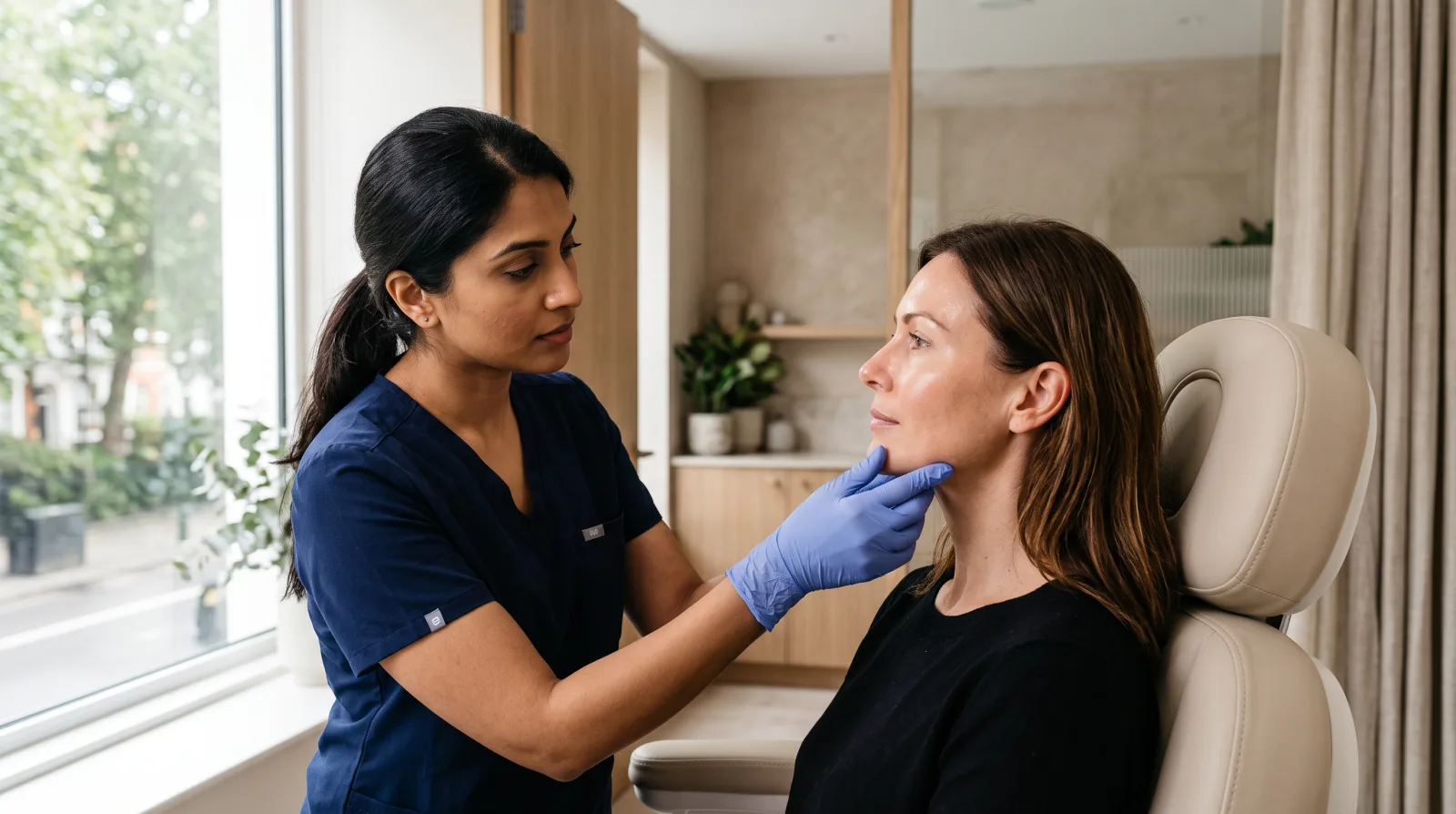
Hyperpigmentation is the most common skin concern I see in aesthetic practice. It is also the one most frequently mismanaged.
The mistake is usually the same. The patient comes in, the practitioner sees brown patches, reaches for vitamin C or a brightening peel, and starts treating. The type of hyperpigmentation is assumed rather than confirmed. Six months later, the patches are still there, and the patient has lost trust in the clinic.
Correct consultation is not optional in hyperpigmentation management. It is the clinical work on which everything else depends.
Melasma
Melasma is a chronic, hormonally and UV-sensitive pigmentation pattern. It presents symmetrically, typically on the cheeks, forehead, and upper lip. It is more common in women, in people with Fitzpatrick skin types III to VI, and in those with a history of oral contraceptive use or pregnancy.
The pigment is driven by a UV-plasmin signalling loop in the epidermis. In some cases there is also a vascular component in the dermis. Melasma relapses. Clearance without ongoing photoprotection is temporary. Patients need to understand this from the first appointment.
Post-inflammatory hyperpigmentation
Post-inflammatory hyperpigmentation (PIH) follows injury to the skin: acne, eczema, a chemical burn, or an aesthetic treatment that was too aggressive for the patient's skin type. The pigment is a sequela of the inflammatory cascade. It is not the original problem. Identifying and addressing the underlying cause is part of the treatment plan, not an afterthought.
This distinction matters because treating PIH while the underlying inflammation is still active produces very little change. The melanocytes keep signalling as long as the injury continues.
Solar lentigines
Solar lentigines result from cumulative UV exposure. They are sharply demarcated, flat, and non-inflammatory. They do not fade with sun protection alone once established, but they have no hormonal component and no active inflammatory driver. They respond to different treatment options than melasma and PIH.
Drug-induced hyperpigmentation
Drug-induced hyperpigmentation is underrecognised in aesthetic consultations. Certain medications, including amiodarone, minocycline, antimalarials, and some chemotherapy agents, produce characteristic pigmentation patterns. A thorough medication history is part of the consultation, not an optional extra.
The six-point consultation framework
A structured hyperpigmentation consultation covers six areas.
Distribution and morphology. Is the pigmentation symmetric or asymmetric? Confined to sun-exposed areas or present elsewhere? Flat or slightly raised? These observations already narrow the differential significantly before you ask a single question.
Onset and duration. When did it appear? Did it follow a skin injury, a medication change, sun exposure, or a hormonal event such as pregnancy or starting oral contraception?
Sun exposure history. Daily habits, SPF use, and whether the pigmentation fluctuates seasonally. Seasonal variation is a strong indicator of UV-driven pigmentation.
Skin type. Fitzpatrick typing matters for treatment selection, not just for diagnosis. Aggressive procedures in Fitzpatrick IV to VI without adequate preparation significantly increase PIH risk. This is a two-way clinical concern: the patient may already have PIH, and the wrong treatment choice creates more.
Current skincare and treatment history. What actives is the patient using at home? Has anything helped or worsened the presentation? A patient already using high-concentration vitamin C on melasma with no improvement tells you something. So does a patient who developed PIH following a clinical peel elsewhere.
Wood's lamp examination. Epidermal pigment accentuates under Wood's lamp light. Dermal pigment does not. This distinction affects prognosis and treatment selection directly. Dermal melasma is resistant to topical depigmenting agents that work well on epidermal pigment. Knowing which layer you are dealing with before you prescribe or recommend anything is basic clinical accuracy.
Why getting this right protects your patients
Treating melasma with ablative or aggressive procedures in an unprepared patient can cause PIH on top of melasma. Treating PIH with the wrong active while the underlying cause is still active will produce no meaningful change. Using hydroquinone in patients with Fitzpatrick V or VI without clinical experience in pigment management increases the risk of exogenous ochronosis, a condition more difficult to treat than the original pigmentation.
NICE Clinical Knowledge Summaries on melasma and NHS guidance both emphasise the chronic nature of these conditions and the importance of managing patient expectations alongside any active intervention. Hyperpigmentation conditions do not have short, fixed treatment courses. They require accurate diagnosis, honest prognosis, and a clinical relationship built on both.
The consultation is where that starts. Not the product choice. Not the peel selection. The consultation.
Hyperpigmentation Decoded covers the full clinical framework: how to classify presentations using the six-point assessment above, what tools to use at each skin type, how to sequence actives and procedures, and how to set realistic patient expectations for conditions that relapse. The course is £150 and available now. Bernadette's free Hyperpigmentation Decoded Mini walks through the assessment lesson by lesson first.