
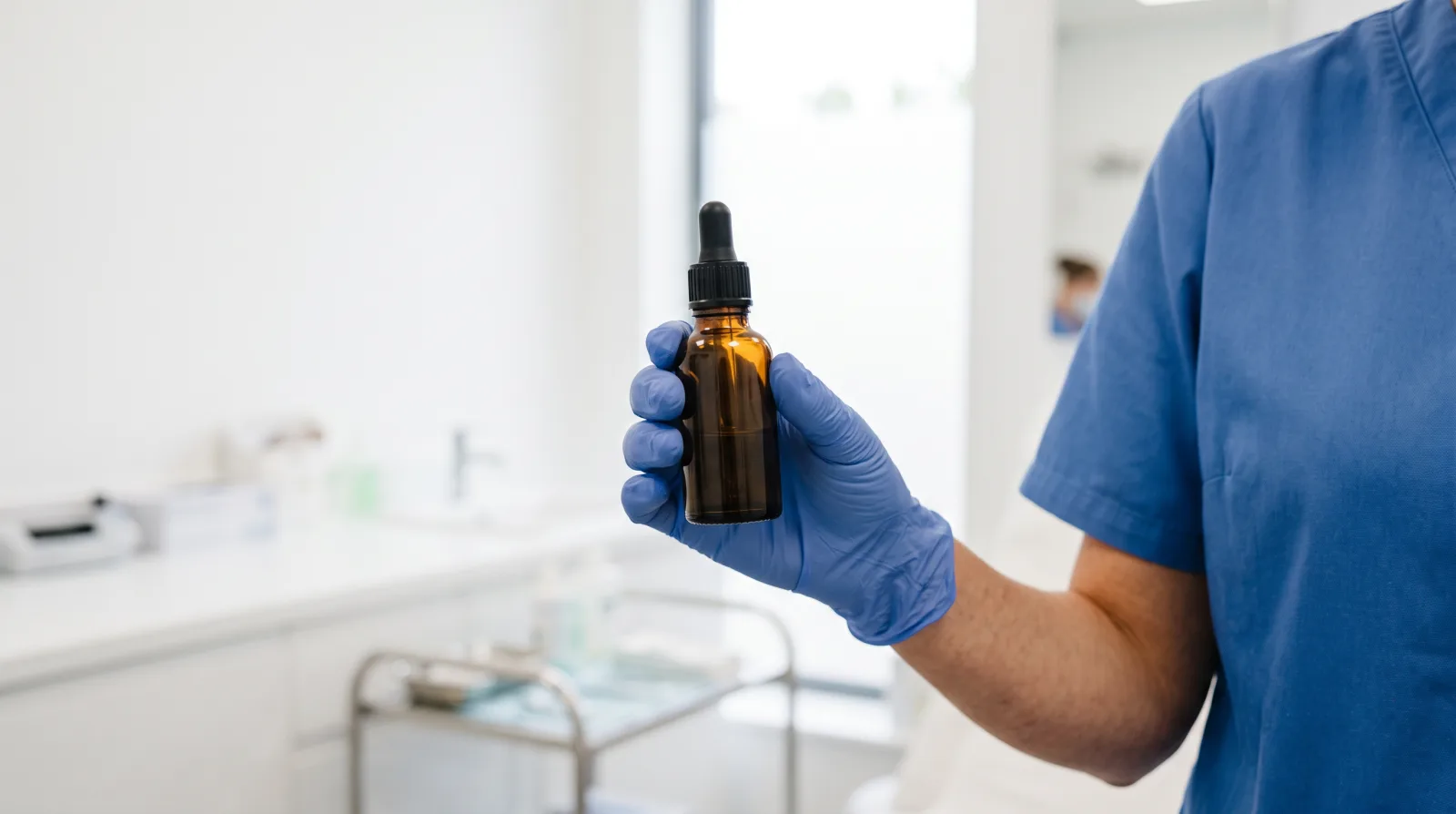
Azelaic acid is a Prescription Only Medicine in the UK at clinical concentrations (15% gel, 20% cream), licensed for rosacea and acne vulgaris. It also has supporting evidence in post-inflammatory hyperpigmentation. Its mechanisms span antimicrobial, anti-inflammatory, keratolytic, and selective tyrosinase-inhibiting pathways, which is why it appears across three distinct indications in UK clinical guidance.
What Is Azelaic Acid?
Azelaic acid is a naturally occurring saturated dicarboxylic acid, found in low concentrations in grains including wheat, rye, and barley. It entered clinical use as a topical treatment in the late 1970s and early 1980s, when researchers investigating the bleaching effects of the fungus Malassezia furfur on skin identified azelaic acid as the active compound responsible for the partial depigmentation seen in pityriasis versicolor. That observation led to the development of therapeutic formulations and, ultimately, licensed products for acne and rosacea.
The mechanism is worth understanding clearly because it explains why the same molecule appears in multiple treatment algorithms.
Keratolytic and comedolytic action. Azelaic acid normalises follicular hyperkeratinisation, the process by which keratinocytes accumulate in the follicular channel and form the plug that precedes an acne lesion. This mechanism is shared with topical retinoids, though the pathways differ.
Antimicrobial effect. Azelaic acid inhibits protein synthesis in Cutibacterium acnes and other bacteria associated with follicular inflammation. Crucially, this is not an antibiotic mechanism, meaning azelaic acid does not carry the resistance risk associated with topical clindamycin and erythromycin.
Anti-inflammatory effect. At the concentrations used in licensed products, azelaic acid reduces production of reactive oxygen species by neutrophils and suppresses pro-inflammatory cytokines. This accounts for its activity in rosacea, where bacterial proliferation is only part of the pathology.
Selective tyrosinase inhibition. Azelaic acid inhibits tyrosinase activity selectively in hyperactive melanocytes, reducing excess melanin production without affecting normally functioning melanocytes. This selectivity is the key distinction from agents like hydroquinone, and it is what makes azelaic acid useful in hyperpigmentation without a meaningful risk of depigmenting surrounding normal skin.
Understanding these four pathways tells you who is likely to benefit and helps set appropriate expectations before initiating treatment.
Azelaic Acid for Rosacea: What the Evidence Shows
The evidence base for azelaic acid in rosacea is the most substantial of its three indications. NICE CKS for rosacea includes azelaic acid 15% gel as a recommended first-line topical treatment for the papulopustular subtype, reflecting the results of randomised controlled trials that have consistently shown meaningful reduction in inflammatory papule and pustule counts.
Papulopustular rosacea is characterised by a chronic inflammatory eruption primarily affecting the central face, driven by innate immune dysregulation, vascular changes, and in many cases elevated Demodex folliculorum counts. Azelaic acid addresses the bacterial and inflammatory components of this picture.
What the trials show. In phase III randomised controlled trials comparing azelaic acid 15% gel with vehicle gel, active treatment produced significantly greater reductions in inflammatory lesion counts, with response rates of approximately 50 to 70% of patients achieving at least a 50% reduction over 12 weeks of twice-daily application.
Comparator data. Head-to-head comparisons between azelaic acid 15% gel and metronidazole 0.75% gel (the other established first-line topical for rosacea) show broadly comparable efficacy. Neither agent is clearly superior, and prescribing choice often comes down to patient preference and tolerability.
Practical considerations for prescribers:
- Stinging, burning, and tingling in the first two to four weeks are common and are generally benign. Advising patients proactively significantly reduces early discontinuation.
- Twice-daily application is the licensed dosing. Once-daily use is not well-evidenced, though some patients start at once daily and build up to improve tolerance.
- The 15% gel is better tolerated than the 20% cream for most patients with rosacea.
- Photosensitivity is not a meaningful concern with azelaic acid, which makes morning application practical and removes the barrier that makes retinoid-containing products harder for patients to sustain consistently.
One qualification matters here. The erythematotelangiectatic subtype of rosacea (background redness and flushing, rather than papules and pustules) responds less well to azelaic acid. Background redness and flushing are vascular phenomena that topical antimicrobial and anti-inflammatory agents address only partially. Laser and intense pulsed light are more effective for the vascular component. Appropriate subtype assessment before initiating treatment avoids unmet expectations.
Azelaic Acid for Acne: The NICE NG198 Position
NICE guideline NG198, the 2021 guideline for managing acne vulgaris, includes azelaic acid as a treatment option for mild to moderate inflammatory acne. It positions azelaic acid within the range of topical options alongside adapalene and benzoyl peroxide, and identifies specific circumstances where it is the preferred choice.
NG198 recommends azelaic acid particularly where:
- The patient has concurrent hyperpigmentation concerns, because the tyrosinase-inhibiting mechanism treats post-inflammatory marks alongside the active lesions
- Topical retinoids (adapalene) are not tolerated due to irritation, especially in patients with a background of rosacea or sensitive skin
- A treatment that does not contribute to antibiotic resistance is required as part of a longer-term management strategy
The antibiotic resistance consideration is increasingly relevant in clinical practice. The NICE guidance, consistent with UK antimicrobial stewardship principles, discourages long-term topical antibiotic use in acne unless combined with benzoyl peroxide. Azelaic acid provides an antimicrobial treatment pathway that does not select for resistant strains, which gives it a practical advantage in any plan that needs to reduce antibiotic exposure over time.
Comparator evidence in acne trials generally shows azelaic acid to be comparable in efficacy to topical clindamycin on inflammatory lesion counts, with a more favourable tolerability profile than adapalene in sensitive or reactive skin. Adapalene has a larger evidence base overall and remains the first-choice topical retinoid in standard acne management per NG198, but azelaic acid earns its place as an alternative rather than a fallback.
For patients presenting with both acne and rosacea, which is a more common clinical picture than it might initially appear, azelaic acid is one of the few topical agents with evidence and licensing relevant to both conditions simultaneously. That simplifies the treatment regimen and reduces the number of products the patient needs to manage.
Azelaic Acid and Post-Inflammatory Hyperpigmentation
Post-inflammatory hyperpigmentation following acne or rosacea flares is one of the most common concerns practitioners hear from patients, and azelaic acid has a legitimate clinical role here. The evidence, though, warrants careful positioning.
The mechanism is clear: azelaic acid's selective tyrosinase inhibition reduces the output of overactive melanocytes in PIH while leaving normal melanocyte function intact. This is the same selectivity that makes it useful for pityriasis versicolor without causing surrounding depigmentation.
Where the evidence is strongest. Azelaic acid has the best evidence for PIH when the underlying inflammatory trigger (acne or rosacea) is being treated at the same time. Trials examining azelaic acid in populations with concurrent active acne and PIH show meaningful improvements in both lesion count and hyperpigmentation scores over 12 to 16 weeks. This makes biological sense: treating the source of new pigment deposition while suppressing tyrosinase activity in existing lesions addresses both the cause and the consequence.
Where the evidence is thinner. Using azelaic acid as a standalone treatment for established PIH, without an active inflammatory condition, has less well-powered trial support. Effect sizes are more modest, and comparison with agents specifically targeting pigmentation has not been extensively studied. Azelaic acid should not be positioned as the primary treatment for established post-acne marks in isolation from a broader protocol.
The Fitzpatrick advantage. Azelaic acid is well-tolerated and safe across all Fitzpatrick phototypes, including types IV to VI, where the risk of PIH from aggressive treatments is highest. For practitioners managing darker skin phototypes, that safety profile is a practical asset. More aggressive depigmenting interventions carry a meaningful risk of inducing the very dyspigmentation they are meant to treat.
For context on distinguishing the different types of post-acne marks, the earlier piece in the Journal on PIH versus PIE is useful reading alongside this one.
UK Prescribing Status: What Practitioners Need to Know
The regulatory picture for azelaic acid in the UK requires clarity, because the commercially available products span both prescription-only and cosmetic-grade markets, and confusing the two creates clinical and legal exposure.
Prescription Only Medicines:
- Finacea 15% gel (azelaic acid 15%): Licensed for papulopustular rosacea. Requires a prescription from an appropriately registered prescriber.
- Skinoren 20% cream (azelaic acid 20%): Licensed for mild to moderate acne vulgaris, with some prescribers also using it for rosacea consistent with NICE guidance. Requires a prescription.
Only practitioners with prescribing authority can prescribe these products. For non-prescribing practitioners working in aesthetic clinics, the pathway for patients who need prescription-strength azelaic acid is referral or a collaborative prescribing relationship.
OTC cosmetic products:
A wide range of skincare brands market products containing azelaic acid at concentrations between 5% and 10%, classified as cosmetics rather than medicines. These do not require a prescription and can be recommended by any practitioner.
The clinical evidence for concentrations below 10% in therapeutic indications is limited. These products may provide some benefit for mild concerns, but they are not equivalent to prescription formulations and should not be presented as such to patients.
For non-prescribing practitioners, the appropriate response to a patient who clinically needs prescription-strength azelaic acid is referral, not a higher-percentage cosmetic product as a workaround. Working within your scope is both a regulatory requirement and a professional standard that the JCCP and relevant regulatory bodies expect. The broader context of practitioner regulation and scope is addressed on the regulation section of this site.
The Cosmeceutical Gap: What Lower Concentrations Can and Cannot Do
The cosmetics market's interest in azelaic acid has grown considerably over the past five years. Products marketed at 10% or lower are now widely available from direct-to-consumer skincare brands. That growth has outpaced the evidence at those concentrations, and practitioners should understand the limits clearly before incorporating these products into clinical recommendations.
Dose-response is not linear. The relationship between azelaic acid concentration and therapeutic effect is not a simple linear scale. The clinical evidence is built at 15% and 20%. A 10% product is not simply half as effective: the pharmacokinetics are different, penetration varies with vehicle formulation, and the available clinical data does not support reliable extrapolation downward.
Vehicle and formulation matter. Finacea gel and Skinoren cream have been developed with specific vehicles designed to optimise skin penetration and bioavailability at their respective concentrations. OTC cosmetic products use different formulations, often prioritising texture, stability, and shelf-life over bioavailability. Two 10% azelaic acid products from different brands may behave very differently on skin.
The combination problem. Most OTC azelaic acid products contain additional active ingredients: niacinamide, tranexamic acid, salicylic acid, or alpha hydroxy acids. When a patient reports improvement, attributing it specifically to the azelaic acid concentration is methodologically unsound. Multi-ingredient products may achieve results, but the contributing mechanism is unclear.
None of this means OTC azelaic acid products should be dismissed. For patients with mild concerns, or those looking to support their skin between clinical appointments, these products can have a place in a broader skincare protocol. The key is honest positioning: these are cosmetic products with limited trial evidence at their concentrations, not clinical-grade treatment equivalents.
Both acne and rosacea are areas where understanding the evidence behind each treatment choice changes how practitioners select and sequence their protocols. Acne Decoded and Rosacea Beyond Redness are the courses that work through the clinical decision-making in a structured, evidence-referenced format designed for UK aesthetic practice. A free Acne Decoded mini is available as a low-commitment starting point.
FAQ
Is azelaic acid a Prescription Only Medicine in the UK?
At clinical concentrations, yes. Finacea 15% gel and Skinoren 20% cream are both Prescription Only Medicines. Cosmetic products at lower concentrations (typically 5-10%) are sold without prescription under cosmetics regulations. A 10% OTC product is not a substitute for a licensed prescription formulation in a patient who clinically requires one.
What conditions is azelaic acid licensed for in the UK?
Finacea 15% gel is licensed for papulopustular rosacea. Skinoren 20% cream is licensed for mild to moderate acne vulgaris. Both products have a reasonable evidence base for post-inflammatory hyperpigmentation, though PIH is not a licensed indication in its own right.
Can azelaic acid be used during pregnancy?
Azelaic acid has a good safety profile in pregnancy and is generally considered an acceptable topical option for conditions such as gestational acne or pregnancy-related hyperpigmentation. This makes it useful precisely where other effective options, including topical retinoids, are contraindicated. Clinical judgement and discussion with the patient's obstetric team should inform any prescribing decision.
Does azelaic acid cause skin lightening?
Azelaic acid's tyrosinase-inhibiting mechanism is selective for hyperactive melanocytes. It reduces excess pigmentation in hyperpigmented areas without depigmenting normal surrounding skin. At licensed concentrations, unintended lightening of normally pigmented skin is not a clinically significant concern.
How long does azelaic acid take to work?
In randomised controlled trials for rosacea and acne, significant improvement in inflammatory lesion counts is typically seen from week four onward, with the strongest results at 12 weeks. Improvement in post-inflammatory hyperpigmentation takes longer: 12 to 16 weeks of consistent use is a more realistic timeframe before meaningful assessment. Patients should be counselled on this at initiation to support adherence.
What are the most common side effects of azelaic acid?
Stinging, burning, and tingling are the most commonly reported side effects, particularly in the first two to four weeks. These generally resolve as the skin adjusts. True allergic contact dermatitis is rare. Persistent burning or signs of worsening inflammation beyond the adjustment period warrant reassessment. Azelaic acid does not cause significant photosensitivity.